
Why refrigerator disposal takes extra planning
A broken refrigerator or freezer is not ordinary household trash. Behind its insulated walls are materials that need special handling, including refrigerant, compressor oil, and, in some older models, components containing other hazardous substances. Its weight and size also make moving it a safety issue.
If you are researching refrigerator disposal Orange County options, the main rule is straightforward: keep the appliance intact and use a collection or recycling route that accepts refrigeration equipment. Do not cut the lines, drain the compressor, or assume a regular trash pickup will take it.
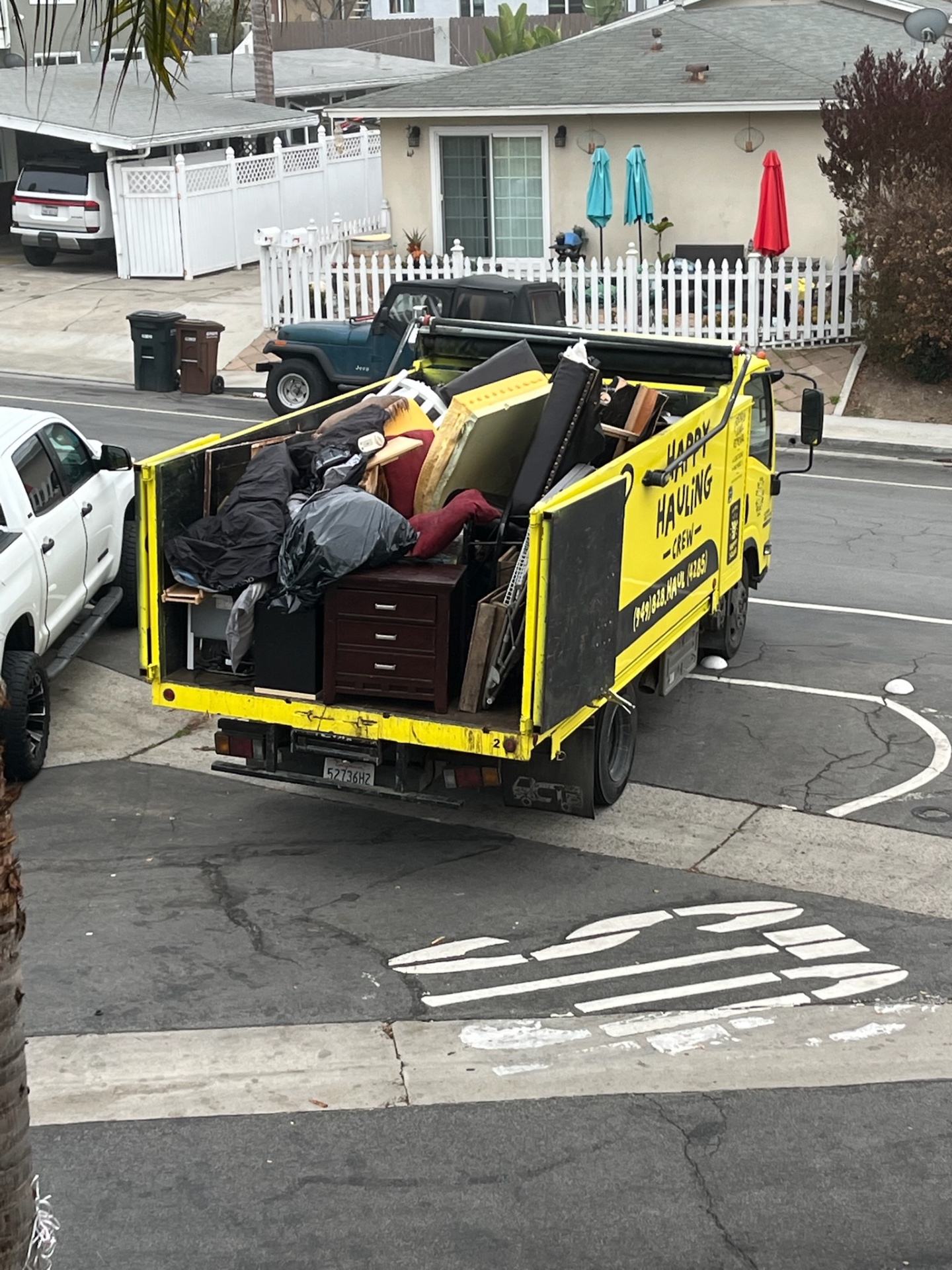
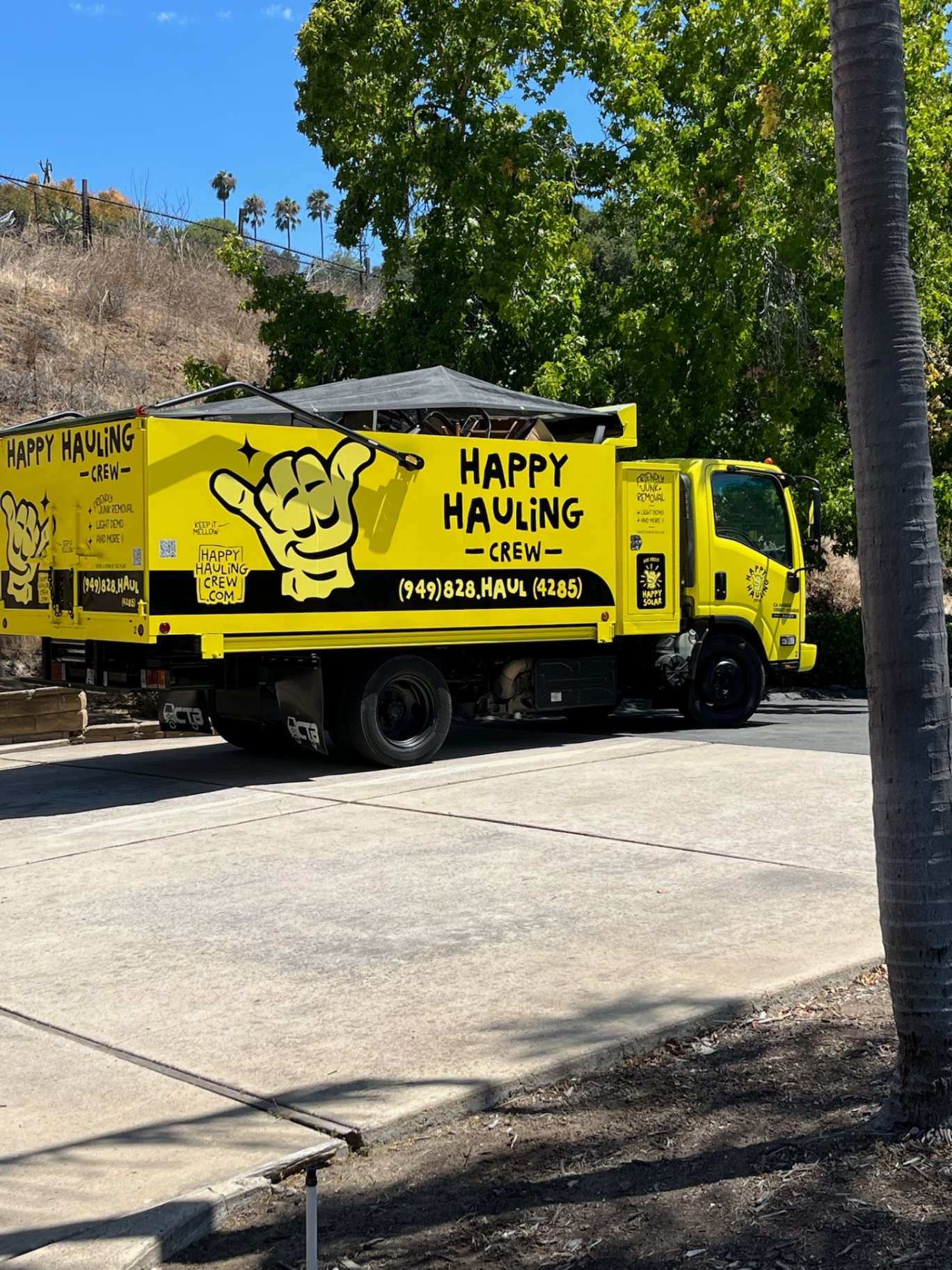
At Happy Hauling Crew, we help Orange County homeowners plan the lifting and hauling without turning an appliance replacement into a weekend project. Here is what California rules mean for your kitchen refrigerator, garage freezer, or spare fridge.
California rules focus on refrigerants and hazardous components
Refrigerant must be recovered, not released
Federal environmental rules prohibit knowingly venting many refrigerants during appliance servicing or disposal. Both older and newer refrigeration systems need appropriate handling. An appliance being old, unplugged, or no longer cooling does not mean its refrigerant is gone.
Refrigerant recovery requires suitable equipment and trained handling. It is not a homeowner preparation step. Leave tubing, valves, and the compressor alone, even if someone suggests cutting the appliance apart to make it lighter.
A disposal program may accept a refrigerator with refrigerant still inside because it has arrangements for recovery. Another facility may require documented recovery before acceptance. Call first rather than assuming every scrap yard follows the same intake process.
California regulates appliance recycling
California's appliance recycling requirements address materials that must be removed before an appliance is crushed, shredded, or otherwise processed for scrap. Depending on the appliance, these can include refrigerant, oil, mercury-containing parts, and certain capacitors.
The state's Certified Appliance Recycler program, overseen by the Department of Toxic Substances Control, helps govern that work. Transporting an intact refrigerator and performing regulated recovery or dismantling are different activities. A pickup crew does not necessarily perform the recycling treatment itself.
For a homeowner, the practical question is: does the receiving program accept intact refrigerators and arrange the required processing? A vague promise to sell the metal is not a complete disposal plan.
Choose a disposal route that accepts refrigerators
Across Orange County, the available options depend on your address, waste provider, appliance condition, and access. A collection arrangement in San Clemente may differ from one in Irvine or an unincorporated community.
- Retailer haul-away: If you are buying a replacement, ask whether the retailer takes the old appliance. Confirm disconnection requirements, access limits, and whether a separate garage freezer qualifies.
- Local bulky-item collection: Your waste provider may offer scheduled appliance pickup. Ask specifically about refrigerators and freezers, since general bulky-item acceptance does not automatically include refrigerant-containing appliances.
- Appliance recycling facilities: Confirm current acceptance rules, documentation requirements, and any charges before loading a truck.
- Professional removal: A hauling service can handle lifting and transportation when stairs, tight doorways, or multiple items make self-hauling impractical.
Do not assume a household hazardous waste collection center accepts whole refrigerators. Likewise, a public disposal site may have separate restrictions for refrigerant-containing appliances. Check current guidance for the specific location.
Happy Hauling Crew offers refrigerator removal for customers who need help getting an unwanted unit out of the home and into an appropriate disposal route. If other equipment is leaving too, our appliance removal service can help you plan the larger pickup.
Keep the appliance safe until pickup
Leaving a refrigerator beside the garage or at the curb creates risks beyond appearance. Doors can trap children, a tall unit can tip, and a leaking water connection can damage the property. Keep the appliance in a secure location until your scheduled collection.
Take child-entrapment precautions seriously
California law addresses abandoned or discarded refrigerators and similar containers with locking or latching doors that are accessible to children. Older latch-style units are especially concerning, but no unwanted refrigerator should become a play space.
Ask your pickup provider whether doors must be removed before collection. Where removal is needed, arrange it safely and make sure the appliance cannot close and trap someone. Do not rely on a warning sign or tape as your safety plan. Avoid leaving a unit unattended where children can reach it.
Do not take apart the refrigeration system
Leave the compressor and refrigerant circuit intact. Do not puncture tubing, strip parts from the sealed system, or drain liquids onto the ground. If you see damaged lines or suspect a leak, keep people away and ask a qualified appliance professional for guidance before handling the unit.
Curb placement also needs approval. Schedule collection first and follow your waste provider's placement window, along with any applicable property rules. Never abandon an appliance beside a dumpster, on vacant land, or outside a donation center.
How to prepare a refrigerator or freezer for removal
Good preparation protects your floors and gives the removal crew a clear picture of the job. Follow the appliance manufacturer's instructions and your pickup provider's requirements.
- Empty the unit completely. Remove food, ice, beverages, and anything stored on top. Move perishables to working refrigeration before unplugging.
- Plan the disconnection. Unplug the power cord when safely accessible. If the unit has an ice maker or water dispenser, shut off its water supply before disconnecting the line. Get qualified help if you are unsure.
- Defrost and dry it. Allow enough time for ice to melt, contain meltwater, and wipe up moisture. Do not chip ice away with sharp tools.
- Check the route. Measure narrow doorways and identify stairs, tight corners, elevator restrictions, and parking limitations. Keep walkways clear.
- Share pickup details. Send photos showing the appliance and its location. Mention whether it is built in, unusually large, or inside a cabinet enclosure.
A built-in refrigerator may need professional disconnection or cabinet work before hauling. Do not pull it forward until you know how it is secured. Large chest freezers and commercial units also deserve advance discussion rather than a standard appliance assumption.
Whether you need pickup in San Juan Capistrano or help clearing a garage in Ladera Ranch, sharing access details early helps everyone arrive prepared.
Frequently asked questions about refrigerator disposal
Can I put a refrigerator in my regular trash?
No. Do not place it in a household trash cart or assume it can go into a general dumpster. Arrange an appliance-specific collection or use a facility that confirms it accepts refrigerators.
Do I have to remove the refrigerant myself?
No. Do not attempt refrigerant recovery yourself. Ask whether your chosen program accepts the appliance intact or requires professional recovery documentation. Keep the sealed system untouched while you arrange disposal.
Are freezer disposal rules different?
Household chest and upright freezers have the same core concerns: refrigerant, compressor oil, safe handling, and entrapment hazards. Tell the provider which type you have so it can confirm acceptance and preparation requirements.
Can I donate a refrigerator that still works?
Possibly. Contact the organization first and describe its age, condition, size, and cooling performance honestly. Acceptance is not guaranteed, and working condition does not automatically make an appliance suitable for donation.
Is refrigerator pickup always free?
No. Some retailer or local collection arrangements may include pickup, while others charge or limit eligibility. Professional hauling costs can depend on volume and job details. Request an estimate rather than assuming a universal fee.
Plan a pickup with fewer surprises
The simplest approach is to confirm an accepted disposal route, keep the refrigeration system intact, secure the appliance, and prepare the access path. Those steps help protect your home and support proper processing after pickup.
Happy Hauling Crew is a family-owned company based in San Clemente, serving all of Orange County. For help removing an old refrigerator or freezer, call or text (949) 806-3831 or request a free estimate. Tell us what is going and where it sits. Spick & Span is the Plan.