

Start with a cleanout plan, not a pile by the door
An office move gets complicated when everything needs a decision at once. Desks are still in use, storage cabinets hold years of paperwork, and the property manager needs the space returned on schedule. Downsizing adds another question: what actually fits in the next office?
For businesses planning an office cleanout in Orange County, the best first step is separating what moves from what leaves. A clear checklist helps prevent accidental disposal, blocked hallways, and last-minute hauling problems.
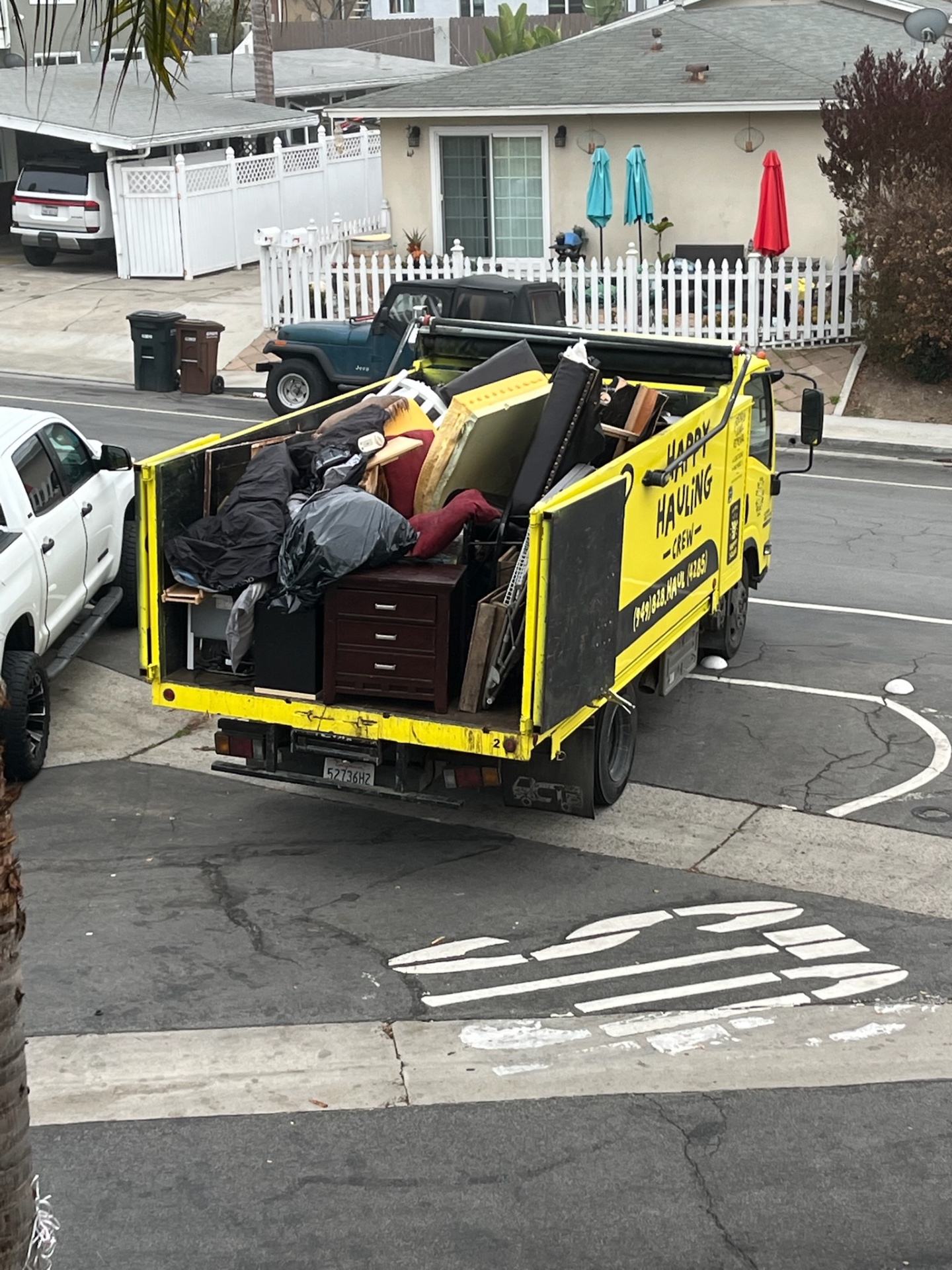
Happy Hauling Crew is a family-owned junk removal and cleanout company based in San Clemente, serving businesses throughout Orange County. Here is a practical way to organize your cleanout, whether you are relocating an entire office or clearing unused space.
Work backward from your handoff date
Confirm when the office must be empty, then leave room for removal, cleaning, repairs, and a final walkthrough. Avoid scheduling every task for the last afternoon of your lease.
- Name one decision-maker: Assign someone who can approve removal and answer questions.
- Review the lease: Check requirements for furniture, fixtures, signage, and the condition of the space.
- Set internal deadlines: Give employees a date to clear personal belongings and identify equipment they still need.
- Separate vendors: Coordinate movers, IT staff, haulers, cleaners, and any repair contractors.
- Confirm the new layout: Measure rooms and workstations before deciding which furniture to keep.
Inventory each room and label every decision
Walk through the office room by room. Include reception, conference rooms, private offices, breakrooms, storage closets, and any off-site storage. Take photos and record large items so your removal estimate reflects the actual scope.
Use four categories: move, reuse or donate, remove, and review. Label items clearly and use the same system throughout the building. Put a deadline on the review category so it does not become a collection of unresolved decisions.
- Workstations: Desks, chairs, filing cabinets, desk organizers, and freestanding partitions.
- Shared spaces: Conference tables, reception seating, bookcases, and display furniture.
- Storage: Shelving, surplus supplies, old promotional materials, and empty containers.
- Breakrooms: Tables, chairs, cabinets, and appliances, with ownership and connections checked first.
- Equipment: Printers, monitors, phones, computers, and accessories that need IT review.
For downsizing, judge items against the new space rather than their usefulness in the old one. Ten extra chairs are still extra if there is nowhere to put them. Confirm that any donation recipient accepts the items before planning around a drop-off or pickup.
Our office cleanout service is a useful starting point for discussing unwanted office contents. Share photos, approximate quantities, and any oversized pieces when requesting an estimate.
Protect business records and separate electronics
A cleanout should never become an accidental records purge. Before anyone removes filing cabinets, desks, or electronics, have the appropriate staff check for confidential information and company assets.
Ask your records lead, accountant, or legal adviser which documents must be retained. Keep records awaiting review separate from ordinary paper recycling. Materials containing employee, customer, financial, or medical information may require secure destruction through a qualified provider.
- Empty drawers, overhead storage, desk pedestals, and locked cabinets.
- Check shared printers and copiers for documents and stored data.
- Have IT identify devices that store data and arrange appropriate sanitization or destruction.
- Confirm whether computers, copiers, networking gear, or phones are leased.
- Separate batteries, toner, and electronics from general removal piles.
- Label items that must stay connected until the move is complete.
Do not assume electronics can go into the same disposal stream as furniture. Confirm accepted materials and the appropriate recycling or handling route before pickup. Keep disposal documentation when your business policies require it.
Also flag cleaning chemicals, fluorescent lamps, and any unknown substances. Those materials may need specialized handling and should be disclosed before the cleanout is scheduled.
Coordinate building access before booking removal
The loading route can matter as much as the amount of furniture. In a multistory office in Irvine, elevator reservations and loading dock rules may shape the schedule. At a smaller property in Costa Mesa, shared parking or a tight rear entrance may be the main constraint.
Ask your property manager for the building's move-out requirements in writing. Do not assume the rules from your last move apply to this location.
- Access hours: Confirm when crews may work and whether noisy tasks have restrictions.
- Elevators: Reserve the freight elevator if required and check its dimensions.
- Parking: Identify an approved loading location without blocking traffic or neighboring businesses.
- Building protection: Ask about floor coverings, wall protection, and elevator padding.
- Vendor paperwork: Find out whether the property requires insurance documentation or advance approval.
- Keys and escorts: Arrange access to locked rooms, service corridors, and loading areas.
Measure oversized furniture and narrow doorways. If a conference table needs disassembly, disclose that early. Built-in desks, attached cabinetry, and wired partitions need separate review, including landlord approval and qualified trades where necessary.
For projects extending beyond office rooms into stockrooms or other business areas, describe the full scope when discussing commercial cleanouts.
Run removal day with a clear checklist
Before the crew arrives, walk the space with your designated decision-maker. Confirm that labels are visible and that employees have removed personal items. Keep furniture scheduled for moving clearly separated from furniture approved for removal.
If your business is staying open during a phased cleanout in Tustin or elsewhere in Orange County, tell staff which areas will be affected. Keep customer routes and emergency exits clear throughout the work.
- Review the scope: Point out everything approved for removal and everything that must remain.
- Identify exceptions: Flag fragile surfaces, restricted rooms, leased equipment, and unresolved items.
- Confirm the estimate: Review pricing and included work before removal begins. With volume-based pricing, the quantity being removed matters.
- Keep an approver available: Make sure someone can answer questions without delaying the job.
- Check cleared rooms: Look behind doors, beneath counters, and inside closets for overlooked contents.
- Document the result: Take photos and note any remaining cleaning, repairs, or landlord requirements.
Removal and final cleaning are different tasks. Confirm what cleanup is included, then arrange any additional janitorial work, carpet cleaning, or repairs needed for handoff. Finish with a walkthrough against your lease requirements, not just a quick look from the doorway.
Office cleanout questions businesses often ask
How far ahead should we schedule an office cleanout?
Start planning once your move or downsizing date is firm. Arrange removal after sorting decisions are made, with enough time afterward for cleaning and repairs. Building access restrictions may limit available windows.
Can we remove only part of the office furniture?
Yes, a cleanout can focus on selected items or rooms. Clearly label what stays and what goes, and explain whether employees will be working nearby.
Should employees empty desks before removal?
Yes. Empty desks and cabinets, then have an authorized person check them. This protects personal belongings, confidential records, and small company assets that are easy to miss.
What information helps with an estimate?
Provide photos, a furniture list, floor level, elevator availability, parking details, and your deadline. Mention heavy items, disassembly needs, and any materials requiring special handling.
Can unwanted office furniture always be donated?
No. Acceptance depends on condition, demand, and the recipient's rules. Confirm acceptance before scheduling, and keep another removal option available if donation does not work out.
Make the next office easier to settle into
A well-planned cleanout keeps unwanted furniture from following you into the next lease. Decide early, protect sensitive materials, coordinate access, and leave time to check the finished space. Spick & Span is the Plan.
Ready to plan your Orange County office cleanout? Call or text Happy Hauling Crew at (949) 806-3831, or request a free estimate. Share your timeline, location, and removal list so we can discuss the scope and next steps.